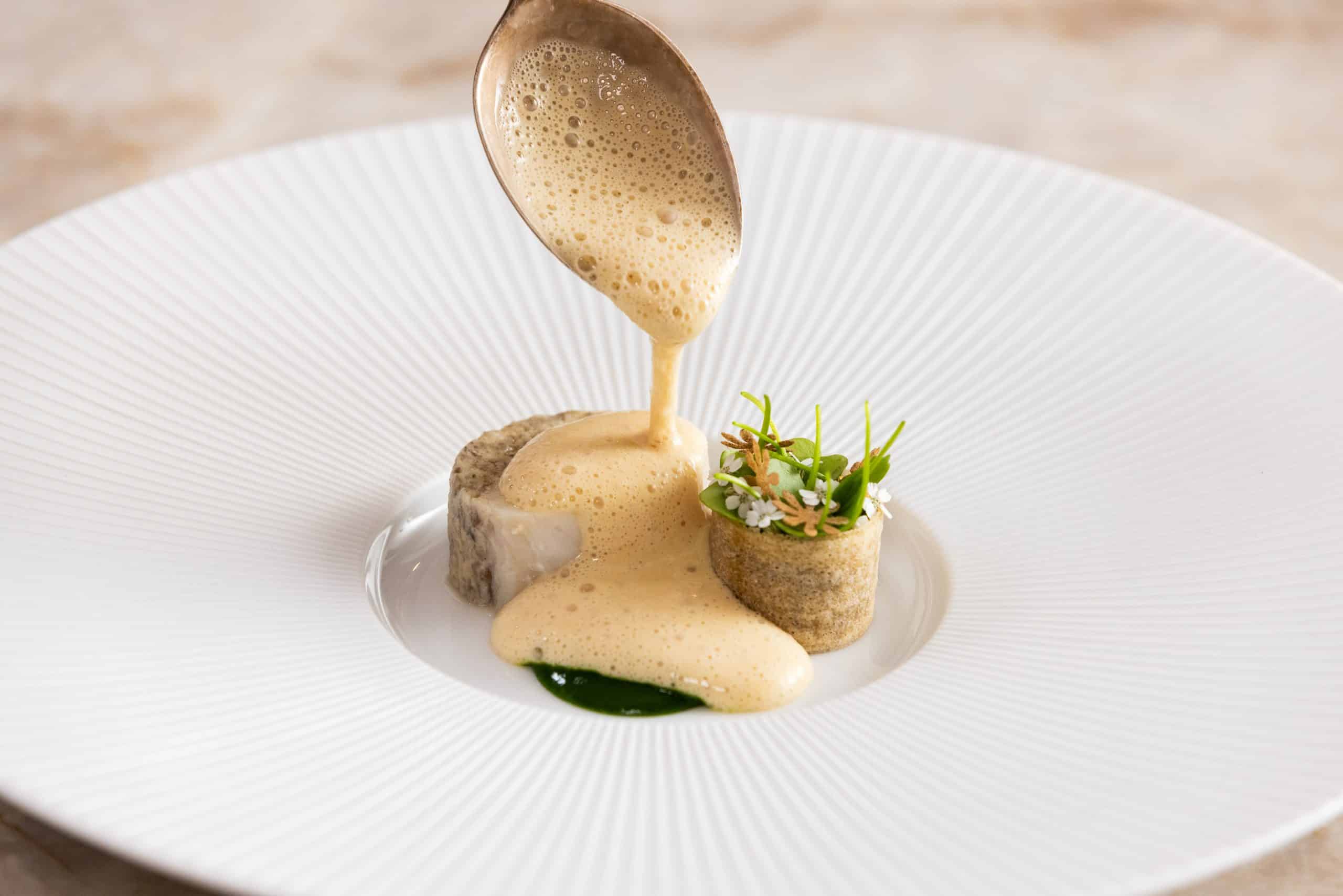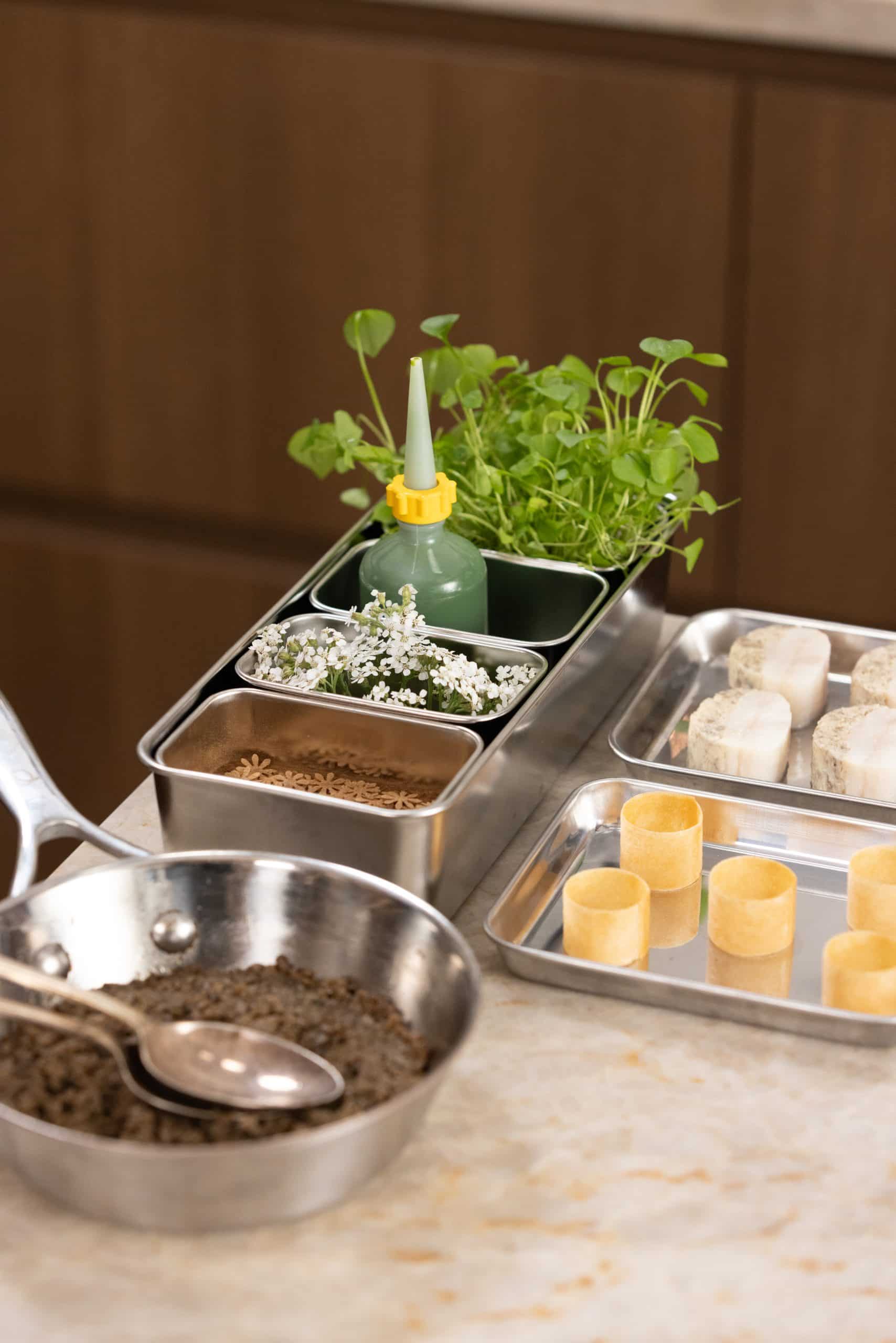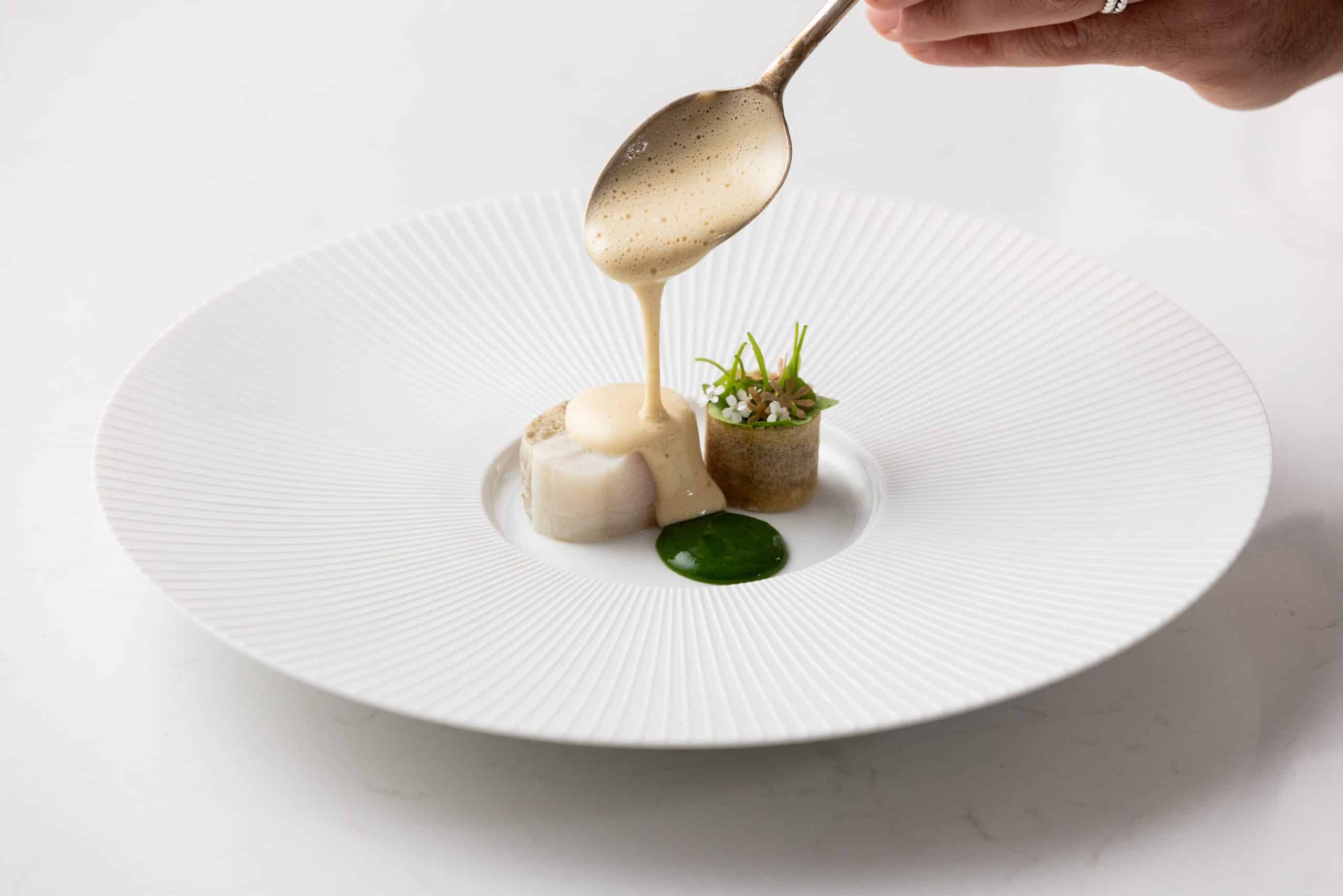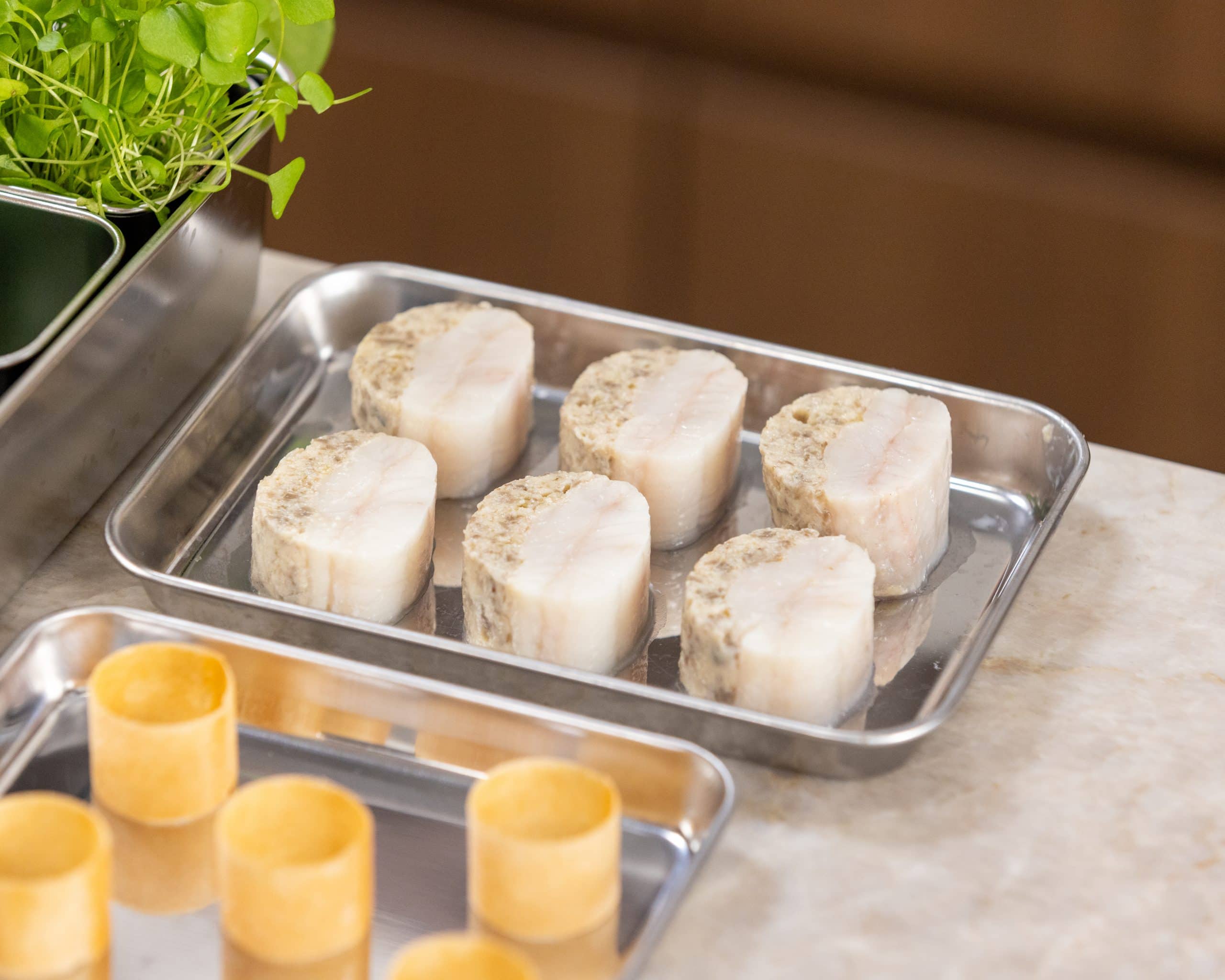
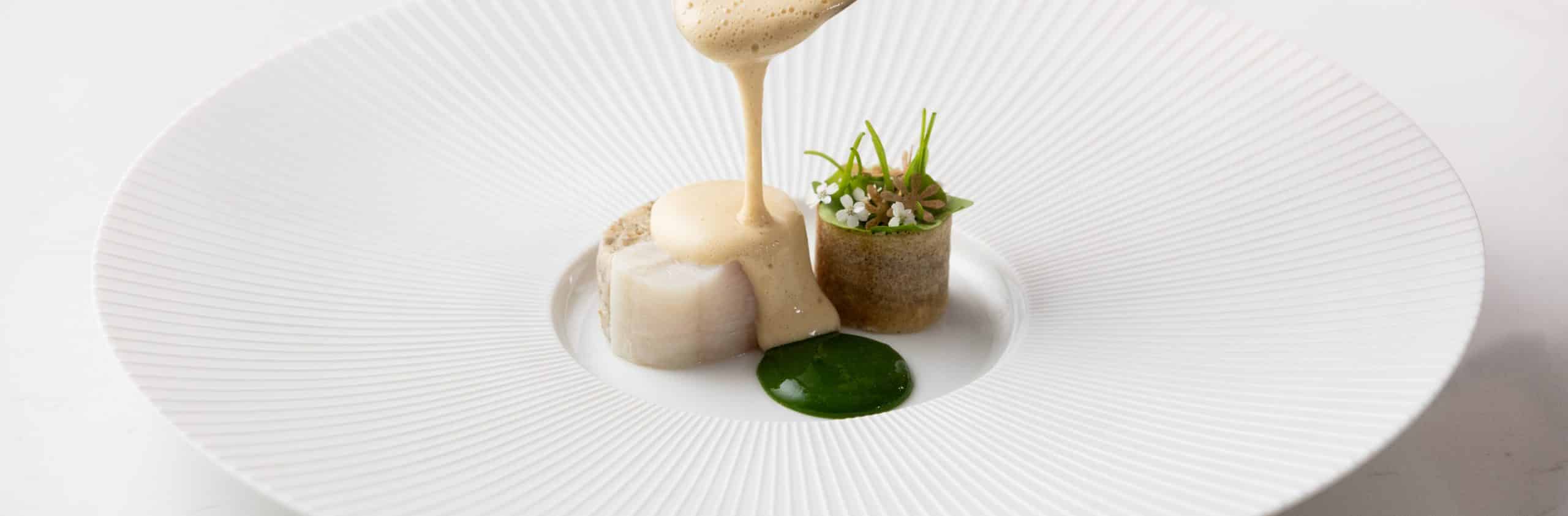
We’re making a sole rouleaux filled with a rich maitake mousse. We pair it with a creamy fish sauce, a crispy cylinder that’s filled with a maitake duxelles and a watercress coulis.
Maitake mushroom duxelles
Ingredients
- 1 onion
- 400 g maitake mushroom cleaned
- 30 g butter
- 3 g salt
- 3 sprigs thyme
- 150 g vegetable broth
- 15 g sushi vinegar
Instructions
- I make it with Maitake mushrooms, but you can use any mushrooms you like. Cut the onion in half and clean it, then chop it. Now clean a couple of maitakes and chop them very fine. In total you need 400 grams. I always do this by hand, because in a food processor it gets very mushy.
- Then melt the butter on a medium heat and start pan frying the chopped onion. When some color starts to form add the maitake with the salt and the leaves from the thyme. Pan fry it on a high heat to give the maitake a proper color.
- Once you’re happy with the color deglaze the pan with the vegetable broth and the sushi vinegar. Reduce it till almost all the broth has reduced and the duxelles is firm. Then season it with some black pepper and if needed salt. Keep it covered in your fridge for later.
How to fillet the sole
Instructions
- First the skin needs to be removed. Use the tip of your knife to scrape a bit of skin on the tail side. It should come off pretty easy.
- Then tightly grab the little bit of skin that is already loose and pull it off. If needed use a kitchen cloth for more grip.
- To fillet the sole there are two ways to do it. First the butterfly technique. Make a long cut on the outside of the sole and insure you’re knife hits the bones and isn’t under the bones. Now keep making long cuts until you reach the spine. Do insure you hear your knife scraping the bones, this means you don’t waste anything.
- Then gently lift your knife to cut over the spine but be aware the fillets stay attached to each other. Now just keep making long cuts until the fillets are completely off the bone. So with the butterfly technique the fillets stay connected.
- Let's do the second technique on the other side. This one is definitely easier and perfect for beginners. Make an incision on the spine and run you knife down on the bones until you have removed the fillet. Do give it a little bit of pressure to insure you don’t leave any fish on the bones. Now do the other side as well and keep the bones, later we use it for the sauce.
- To clean the fillets cut away the edges and trim the sides. All the trimmings I use for the mousse. I always find it easier to first open up the sides with my fingers and then cut it away. Keep the fillets covered in your fridge for later.
Sole & maitake mousse
Ingredients
- 150 g cold sole trimmings
- 40 g egg
- 60 g butter
- 3 g salt
- 50 g cold cream 35% fat
- 100 g maitake duxelles we just made
Instructions
- Mix the cold sole trimmings with the egg, the butter and the salt. Blend it till smooth. Do beware that the mousse stays cold and doesn’t heat up from the friction. Also clean the sides in between.
- When you feel the side of the food processor and it’s not cold anymore while blending add the cold cream. Once it’s incorporated directly stop mixing to prevent the mousse from splitting.
- Transfer it into a bowl and also add 100 grams of the cold maitake duxelles we made before. Fold everything together, but again when it’s incorporated directly stop mixing.
- Now cover your worktop with two layers of wrap and insure it’s very tight. I always make my worktop lightly damp with a wet cloth to insure the wrap sticks well. Lay the sole fillets next to each other on the wrap and season them with salt. Then place them on top of each other with the thick side of one fillet on the thin side of the other fillet, This insures an even thickness all around.
- Now pipe a generous amount of the mousse on top of the sole and level it with a pallet knife. Then use the wrap to create a nice roll. Don’t put too much pressure otherwise the mousse will be pressed to the sides, but do beware there’s no air trapped within the wrap. Now fold the excess wrap to the bottom of the roll and place it on a tray. With one sole you can make 2 rolls.
- Steam the sole at 60 °C (140 °F) till it has a core temperature of 42 °C (108 °F). You could also use a sous-vide, but I prefer it this way. When it has the right temperature directly cool it down in ice water and keep them in your fridge for later.
Creamy fish sauce
Ingredients
- 2 kg flat fish bones cleaned
- 100 g leek
- 100 g button mushrooms
- 150 g onion
- 100 g shallot
- 20 g garlic
- 20 g white wine vinegar
- 2 g black pepper
- 2 g coriander seeds
- 3 bay leaves
- 3 sprigs thyme
- 400 g white wine
- 500 g cream 35% fat
- 100 g butter
- apple cider vinegar
Instructions
- First clean enough flat fish bones for 2 kilograms. To clean them cut away the fins and portion them in more manageable pieces. It’s also very important to cut away the bloodline. This will make your sauce cloudy and bitter. Transfer all the bones in a big pot and rinse them with cold water until the water is clear.
- Meanwhile we can cut the vegetables in thin slices. Begin with the cleaned leek, the button mushrooms, the onion, the shallot and the garlic.
- Once the water is clear drain the bones and submerge them with 2 liters of cold water. Also add the 20 grams of a white wine vinegar and bring this to a simmer on a medium high heat. Any white foam that floats to the top you need to remove with a ladle.
- When it’s simmering and the foam is removed add the cut vegetables. Also add the black pepper, the coriander seeds, the bay leaves and the thyme. Make sure all the ingredients are submerged and let it simmer on a low medium heat for 45 minutes.
- After that you can pass the broth through a fine sieve. Let it drip for at least 30 minutes so you don’t waste a single drop. Then add the white wine with the cream and reduce it till you’re happy with the flavor. This is at least 60%.
- When that’s the case while stirring add the butter. This will thicken and flavor the sauce, so be sure to use a high quality butter. Give it a taste for seasoning and if needed season it with salt and a touch of vinegar. I use an apple cider vinegar. Pour it into a saucepan and keep it in your fridge for later.
Watercress coulis
Ingredients
- 100 g watercress
- 90 g vegetable broth
- 10 g apple cider vinegar
- 2 g salt
- xanthan gum
Instructions
- Begin by picking the leaves from some wild watercress. Now season some boiling water well with salt and blanch the watercress leaves for 15 to 20 seconds. Don’t blanch too much at once to keep the water boiling and directly cool it down in ice water.
- Once all the leaves are blanched and have cooled down squeeze all the water out of the leaves and measure them in a blender. In total I had 60 grams of leaves.
- Also add the vegetable broth, the apple cider vinegar, the salt and a touch of xanthan gum. Blend it till smooth. Just be sure the coulis doesn’t heat up from the friction. For this recipe the xanthan gum is optional, but it does insure the coulis doesn’t split and makes it a touch thicker.
- Then pour the coulis on a bowl that's sitting on some ice water and let it cool down as fast as possible. This prevents the coulis from loosing its bright green color.
Brick dough cylinder & garnish
Ingredients
- 5 sheets brick dough
- melted butter
- mushroom powder
Instructions
- Trim the sides from a couple sheets of brick dough, keep the trimmings aside for later. The portioned square you can portion into strips that are 2.5 centimeters wide. If you want you can also use spring roll or filo dough.
- Lay them on your cutting board or worktop and brush a thin layer of melted butter on top. I always use melted and not clarified butter because the milk liquid will prevent the dough from drying out when shaping it.
- Then season it with some salt and shape the dough on a metal cylinder. You can use any thickness or shape you like. Make sure the end line of the dough strips is all on the same side and place it with that line down on a tray. If you don’t do this the dough might unwrap.
- Bake them at 160 °C (320 °F) till golden brown, that’s about 15 to 20 minutes.
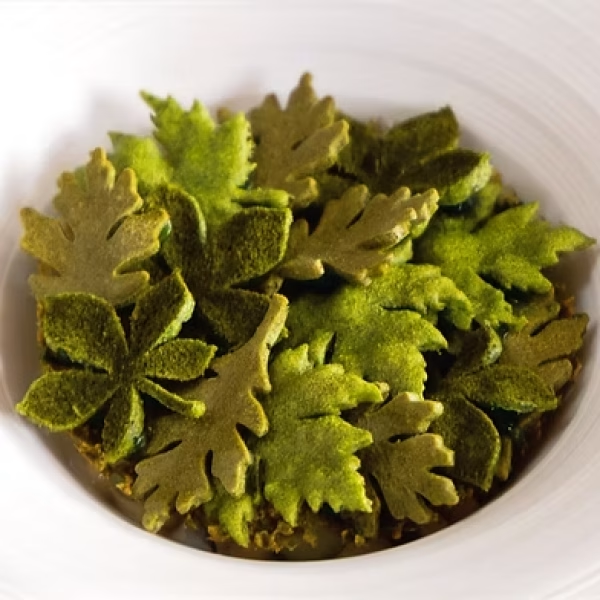
- Now remember the trimmings? I always try to use everything, so the trimmings I cut with a motif puncher and baked also at 160 °C (320 °F) till golden brown. Click here for the puncher I used.
- Once the cylinders are golden when still hot remove them so they don’t break. Do beware you don’t burn yourself. Keep them dry and covered for later. When the brick flowers are golden, you can dust a mushroom powder on top and also keep them dry and covered for later. A lovely garnish and no waste.
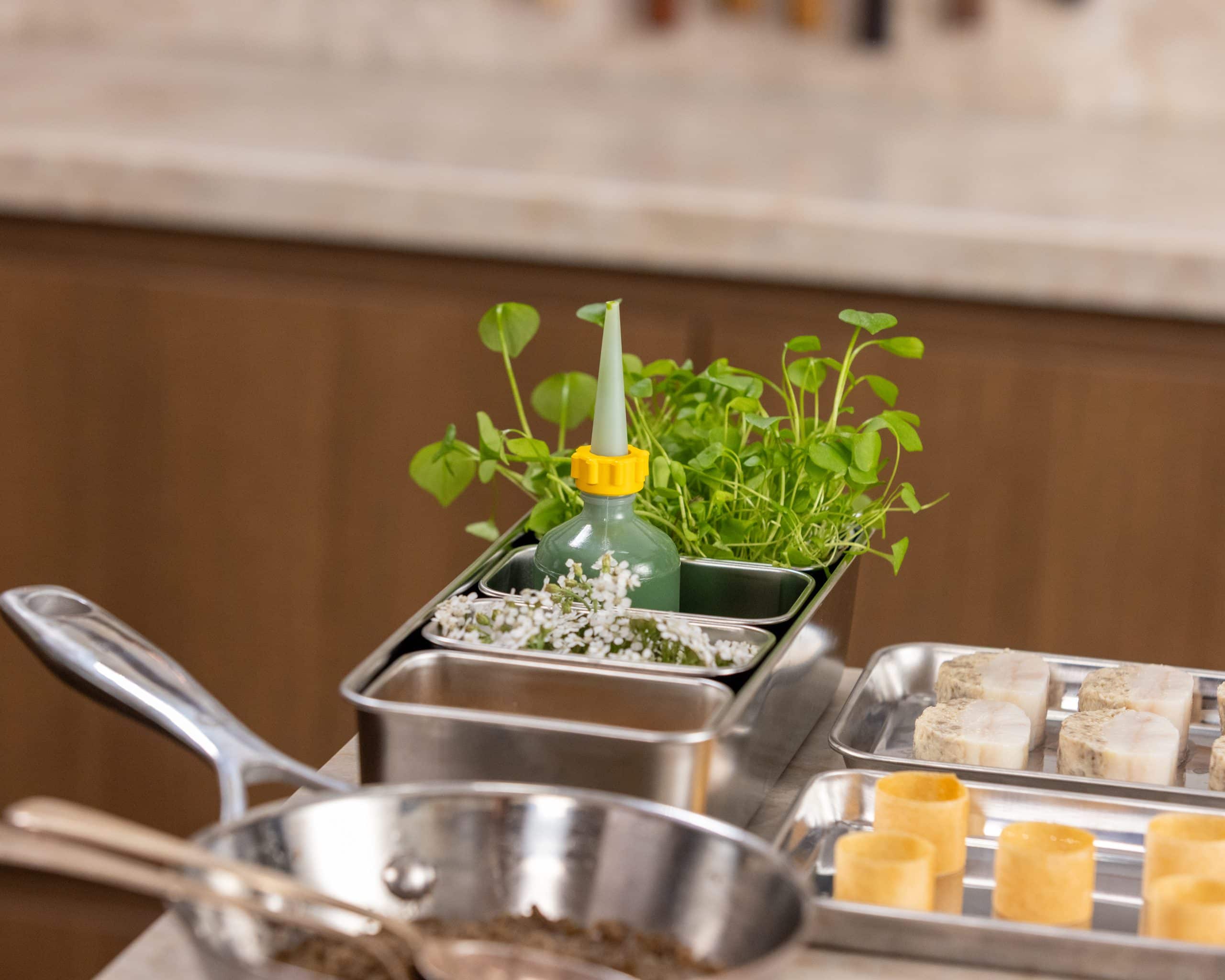
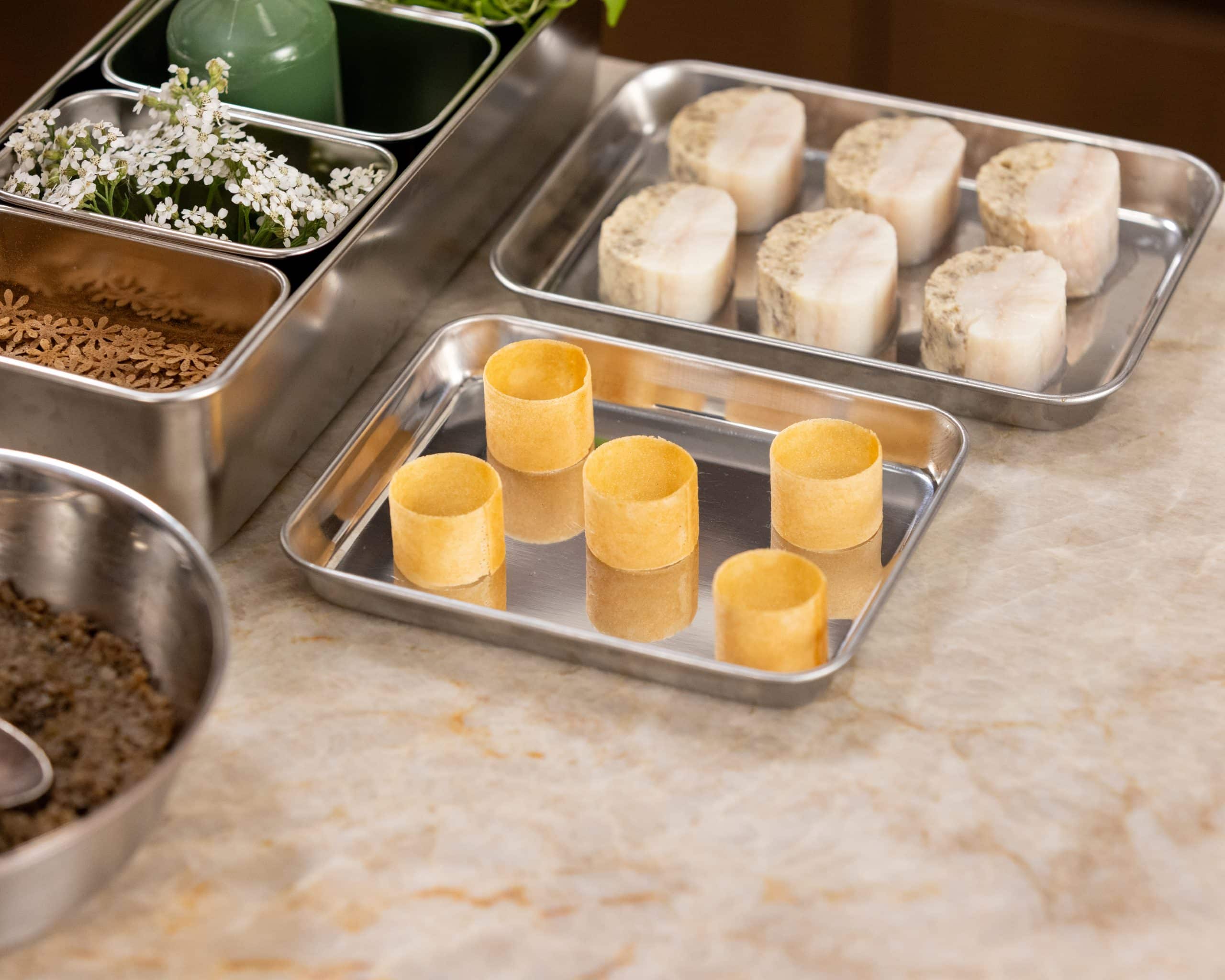
Now that all the prep is done you can set up your station. Do you want to set up your mise en place like this for Christmas? You can find all my prep containers, food trays and piping bottles by clicking on this link. With this you also sponsor my channel and help me develop all my recipes and share them with you guys.
How to finish the dish
Instructions
- First unwrap the sole and portion it to the desired shape and size. Because my Christmas menu is quite large I portion it quite small, but just do as you like. Do use a long sharp knife and be gentle.
- Cover the fish with some wrap and heat it up in an oven at 60 °C °C (140 °F) for about 10 to 15 minutes. Meanwhile also heat up the sauce and blend it with a hand blender to create a lovely foamy sauce.
- Then place a cylinder on a plate and fill it with reheated maitake duxelles. Press it down and fill the entire cylinder with small winter purslane leaves. Also add a couple of the crispy brick dough garnishes and some white yarrow flowers.
- Then place a piece of the reheated sole on the side and pipe some of the watercress puree in between the sole and cylinder. Now on the table finish the dish with that incredible creamy fish sauce.
The pairing
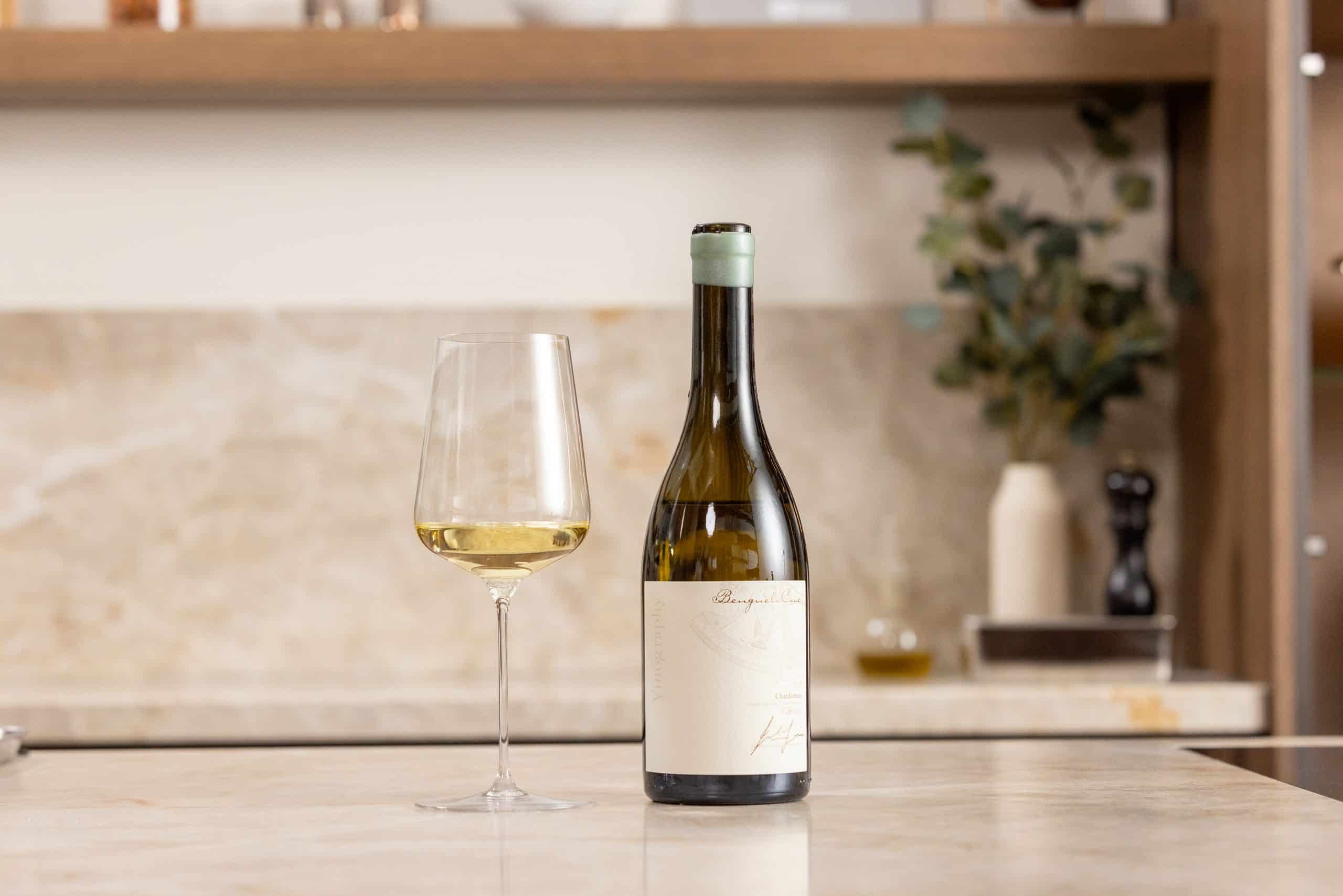
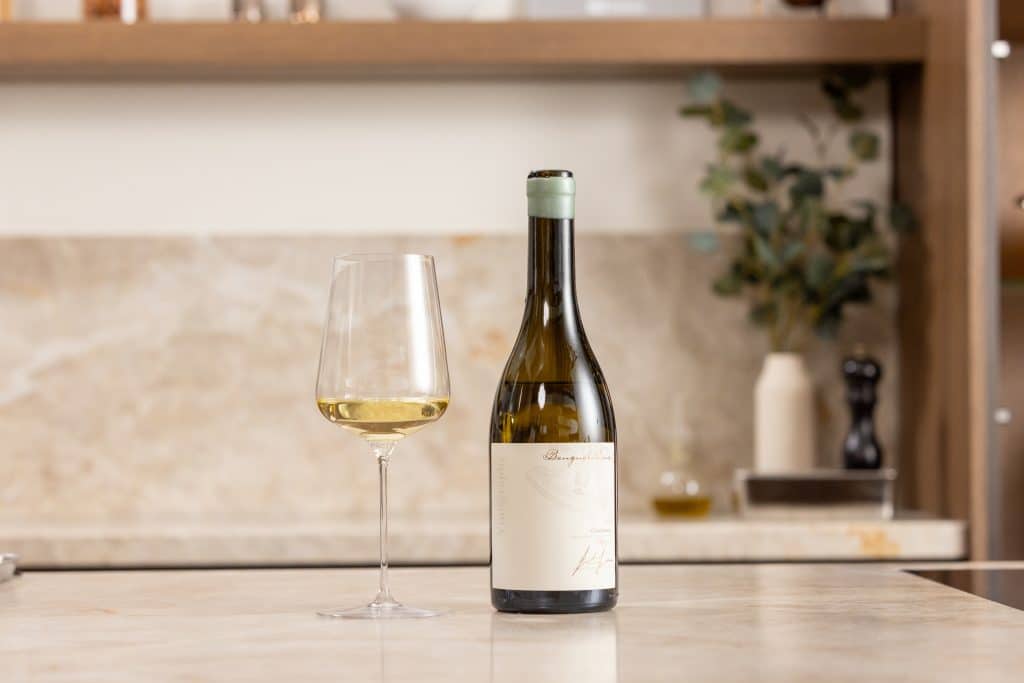
As a pairing, I chose a Chardonnay from Benguela Cove, a beautiful winery situated in the Walker Bay region of South Africa. Located close to the Atlantic Ocean, the vineyards benefit from cool maritime influences, allowing the grapes to ripen slowly and develop freshness, elegance and complexity.
The 2025 Single Vineyard Chardonnay is an exclusive limited release, with only 1,300 bottles produced.
Hand-sorted grapes undergo whole-bunch pressing, natural fermentation in French oak, and 11 months on the lees, It reflects the character of its coastal vineyard, combining fresh fruit, vibrant acidity and an elegant structure.