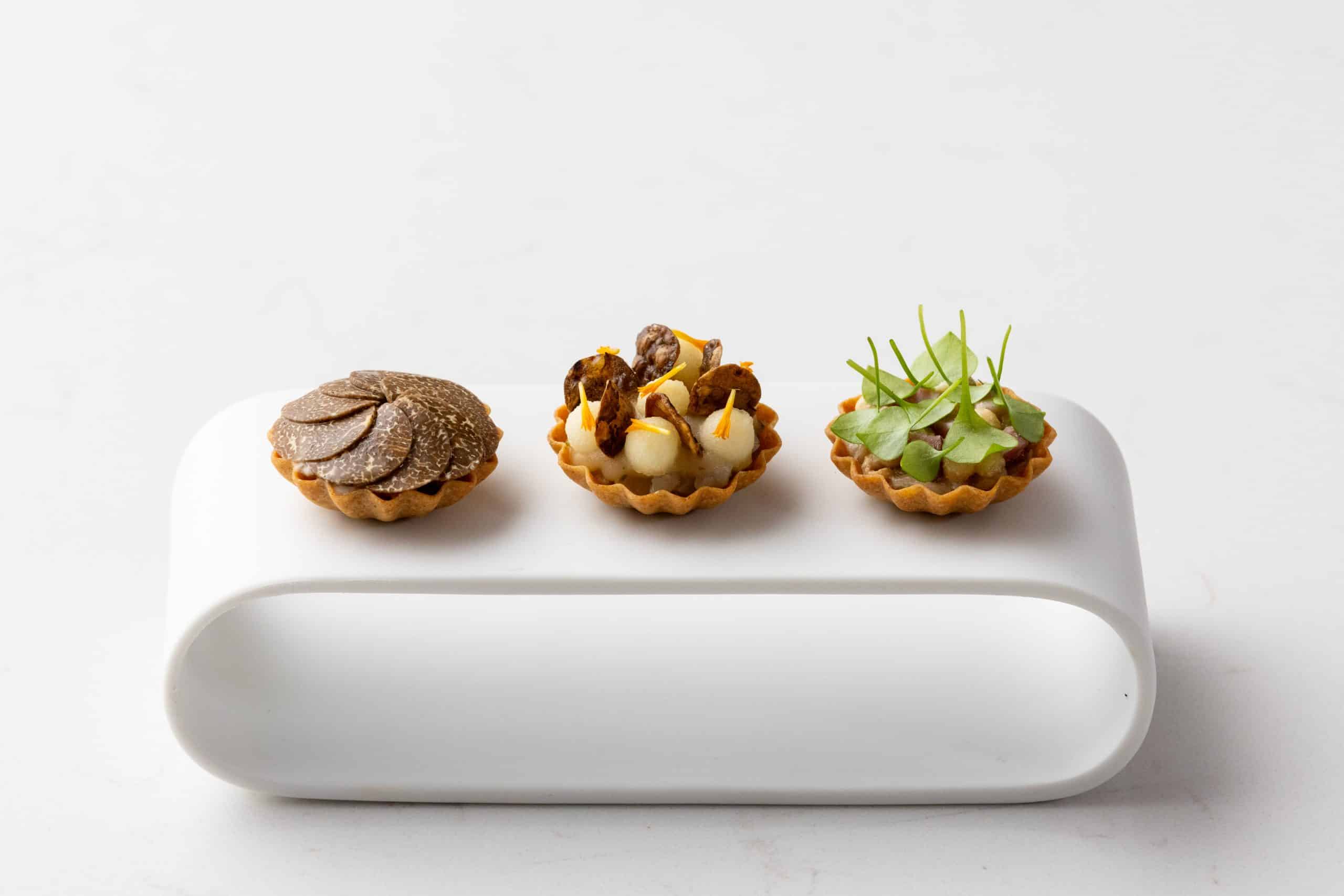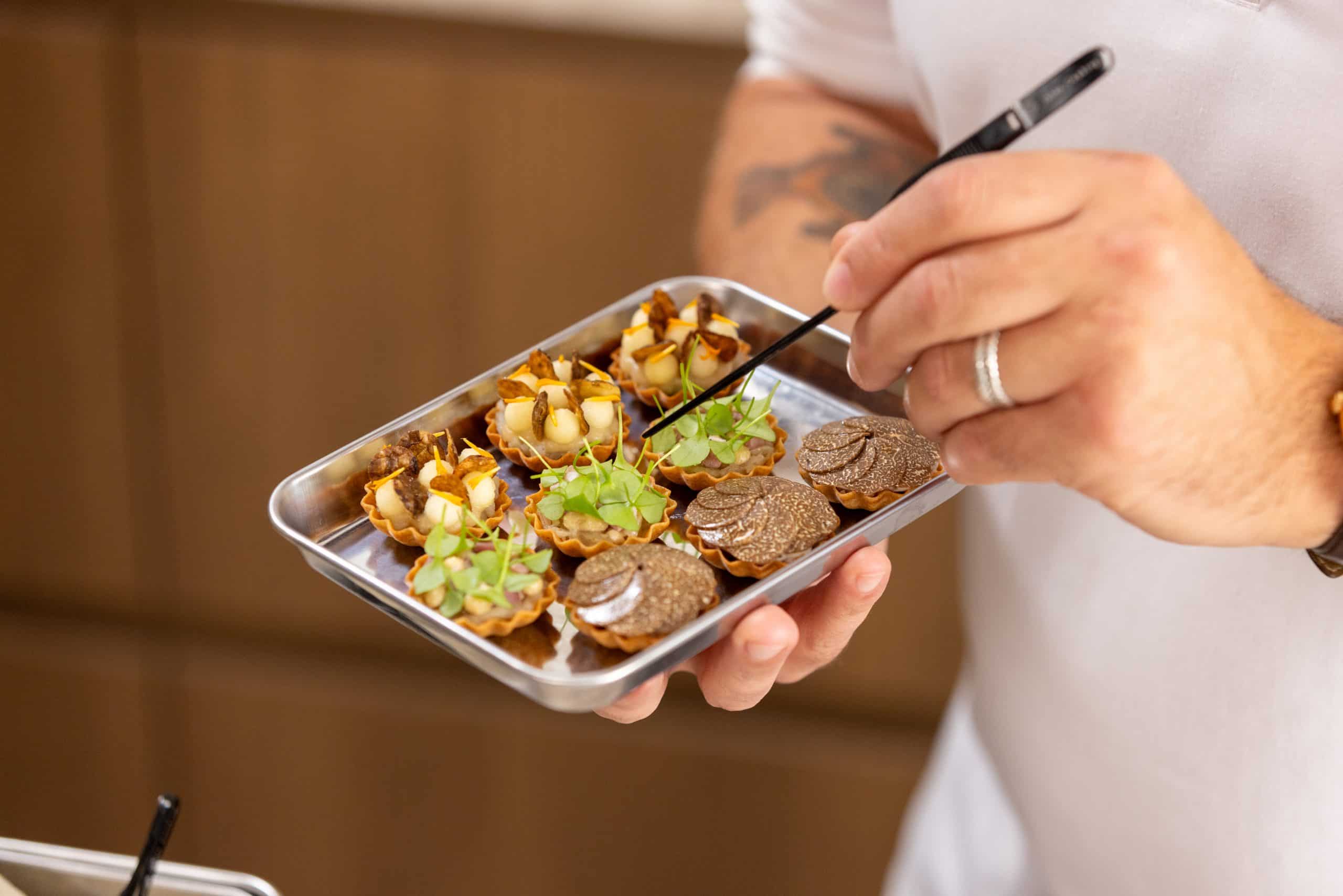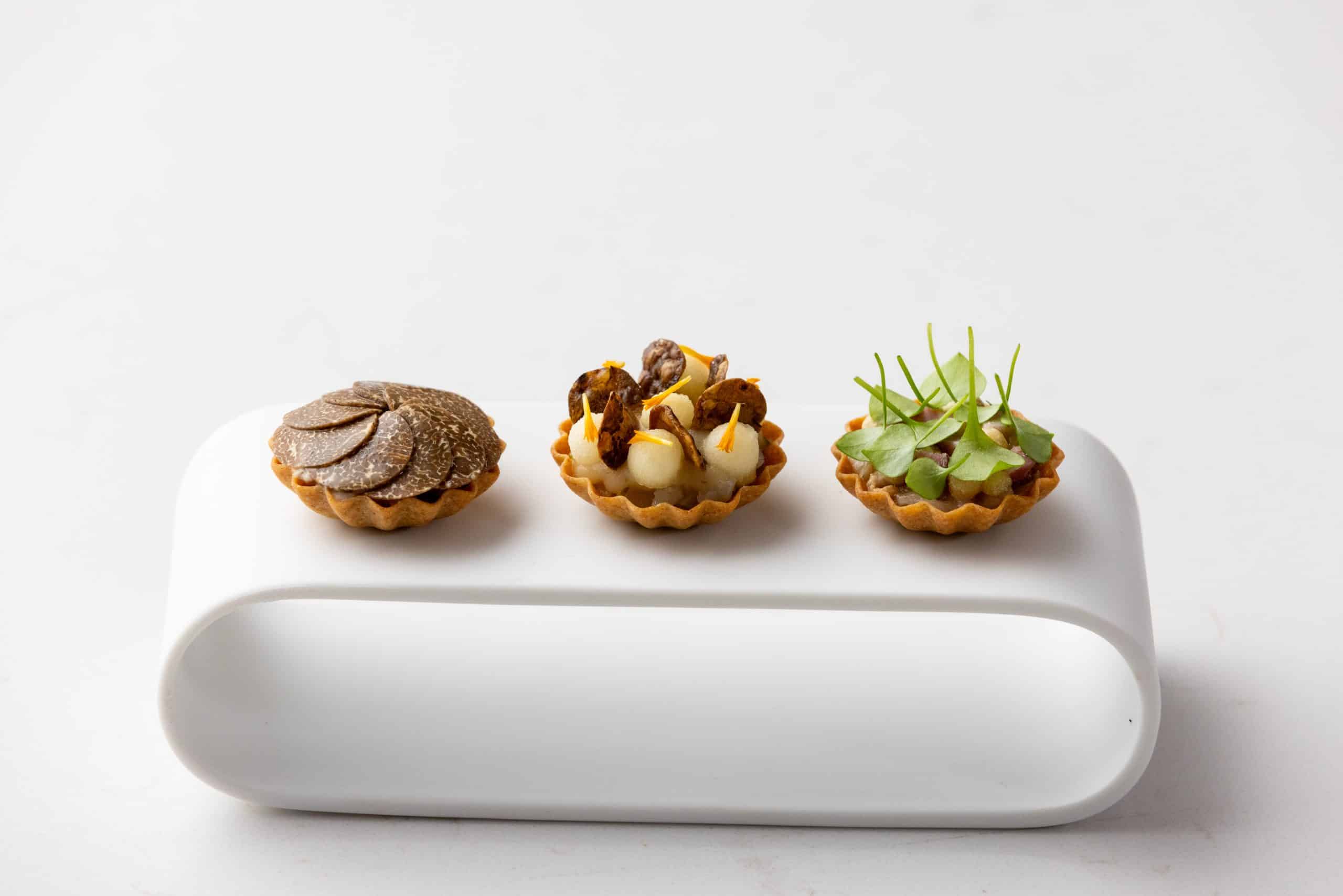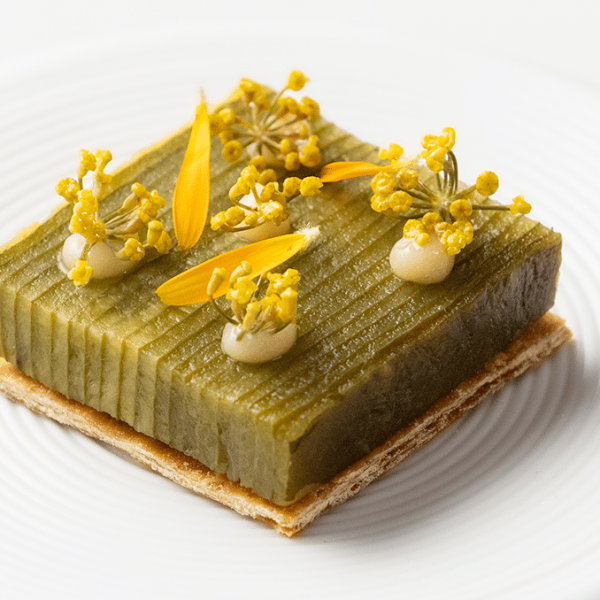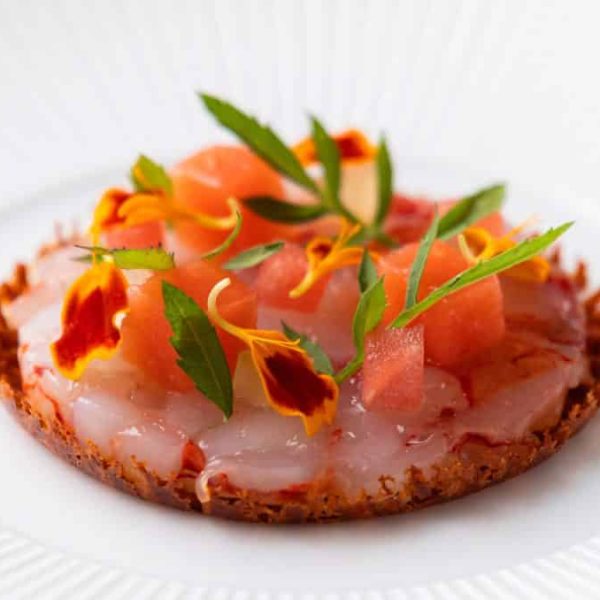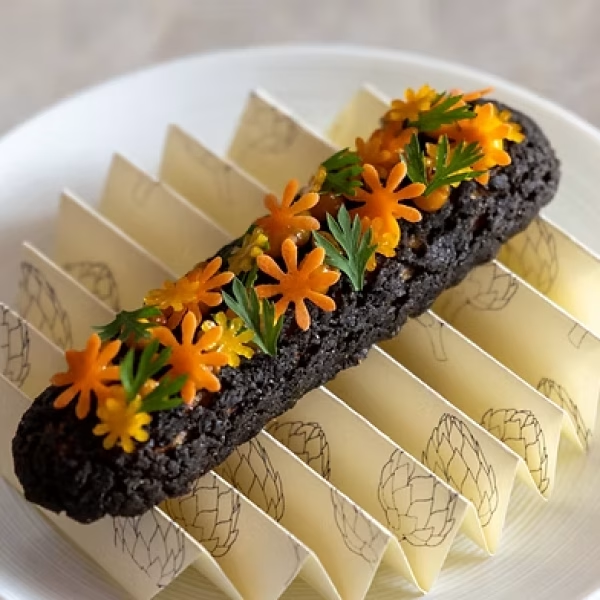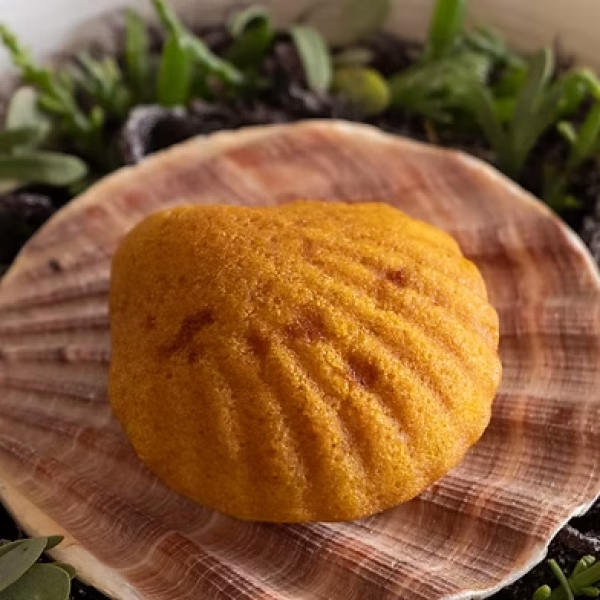

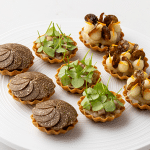
It’s the first creation for my Christmas series, I’ll show you how to make these three incredible tartelette amuses! The first one is a buckwheat tartelette with Jerusalem artichoke and apple. For the second, we’re pairing slow-cooked pork belly with sauerkraut. And the last one is filled with a fresh shrimp salad, cheese cream, and truffle infused with a buckwheat reduction.
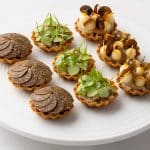
Buckwheat tartelettes
Ingredients
- 200 g flour
- 120 g buckwheat flour
- 120 g water
- 40 g olive oil
- 30 g egg yolk
- 20 g sugar
- 5 g salt
Instructions
- Transfer the flour and buckwheat flour on your worktop and use the bowl to make a well in the middle. Fill it with the water, the olive oil, the egg yolk, the sugar and the salt. Bring all the ingredients together and knead it into a nice dough. You know it’s done when everything is incorporated. Then wrap it and let it rest in your fridge for at least 1 hour.
- After that dust some flour on your worktop and roll the dough into a thin sheet. It needs to be around 2 millimeters thin. Now cut it with a round cutter and remove the excess dough. Bring that dough back together, after letting it rest you can make some more tartelettes.
- Place the dough circle in a tartelette mold and press it down. Press another tartelette mold on top and repeat this process once more. So to summarize it’s mold, dough, mold, dough and mold.
- If needed scrape the sides to clean them and place them upside down on a tray. Add another tray on top and add some weight. I use baking beans. Bake them at 160 °C (320 °F) for around 20 to 30 minutes till golden brown.
- Once golden let them cool down a bit before removing the tartelettes from the molds. Keep them dry and covered for later.
Sauerkraut & bacon tartelette
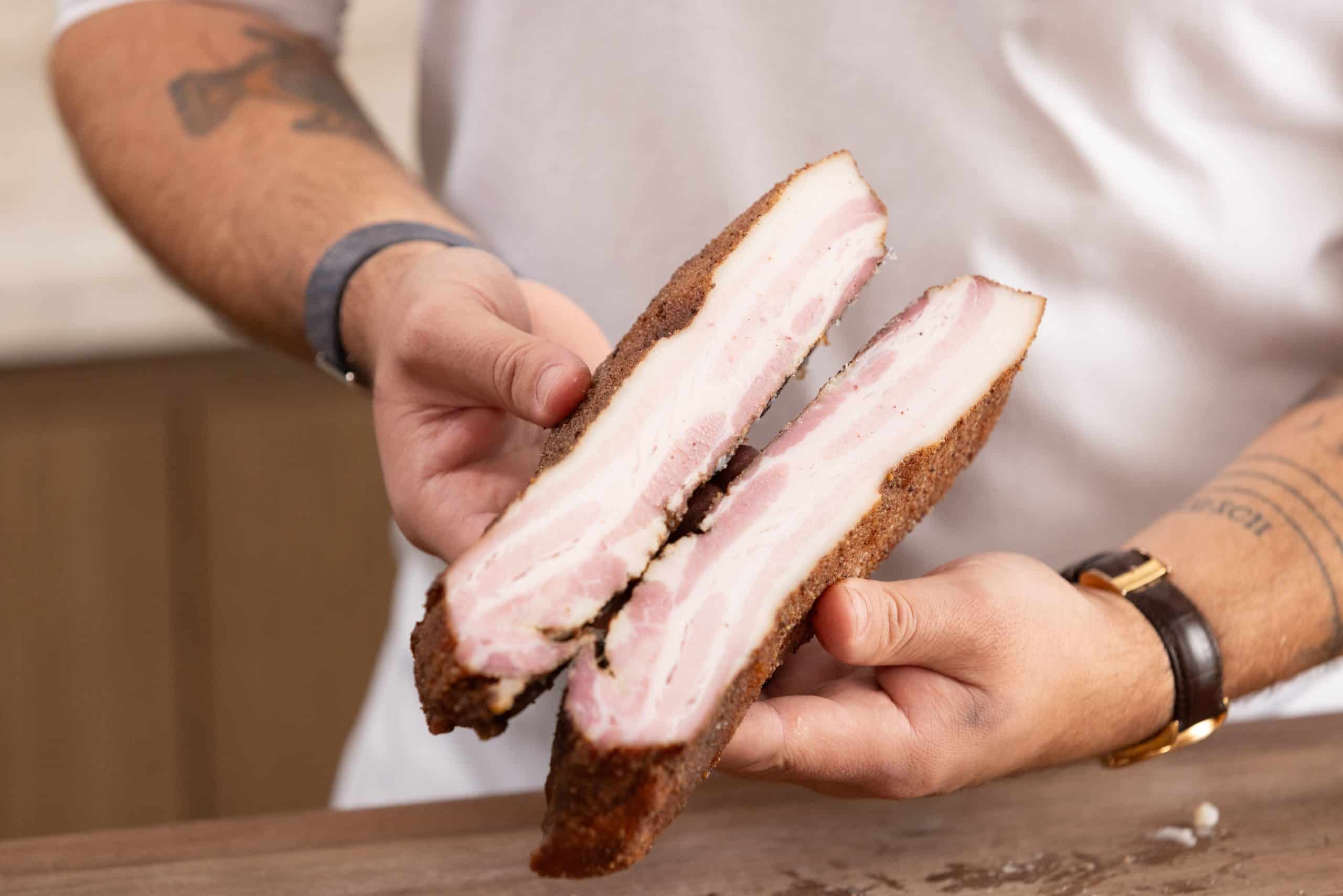
Smoked pork belly
Ingredients
- 1 kg pork belly without skin
- 0.5 cinnamon stick
- 3 pieces star anise
- 3 g fennel seeds
- 10 coriander seeds
- 5 cloves
- 10 black peppercorns
- 50 g cane sugar
- 10 g nitrite salt
- 15 g regular salt
Instructions
Brining the pork belly
- For this I use a pork belly without skin that weighs 1 kilogram. In a pan mix the cinnamon stick with the star anise, the fennel seeds, the coriander seeds, the cloves and the black peppercorns. Toast this on a medium heat for 2 to 3 minutes.
- Once the spices are toasted transfer them into a blender and blend it into a fine powder. Now mix the cane sugar with the nitrite salt, the regular salt and the spice powder. Mix it well.
- Spread half of the brine on top of the pork belly. Cover the other side with the remaining half and be sure the belly is covered all around.
- Now with the fat side up let it brine uncovered for 48 hours in your fridge. The brine will flavor and preserve the meat.
Cooking the pork belly
- You can cook the pork belly on a barbecued at 90 °C (194 °F) till it has a core temperature of 78 °C (172 °F). But let's say you don't have a barbecue, then you need to cook it the following way: place the pork belly in a container that's lined with an oven rack. Pour some apple juice on the bottom of the container. This will keep the belly nice and juicy.
- Press a container with some holes on top and place a small tray with smoke wood in the center. Light it on fire and directly cover it with an airtight tray.
- Then let it smoke in the oven at 90 °C (194 °F) for around 2 to 3 hours.
- It’s been 3 hours so let’s take the belly out and place it together with the rack on a tray. Insert a thermomotor to the center of the belly and continue cooking it till the temperature is 78 °C (172 °F). Be sure it’s really in the center, otherwise it might be undercooked.
- Once cooked let it cool down completely.
- Then you can portion it to the desired size. Just look at that beautiful inside! First I portioned it in slices and then in even small cubes. Keep them covered in your fridge for later.
Sauerkraut
Ingredients
- 1 big onion 200 g when cleaned
- 100 g raw bacon
- 60 g goose or duck fat
- 3 g salt
- 200 g rinsed sauerkraut
- 100 g Riesling wine
- 100 g vegetable broth
- 2 bay leaves
- 2 sprigs thyme
- 10 black peppercorns
Instructions
- Clean the onion and slice it in thin slices. In total you need 200 grams. Then cut the raw bacon in even cubes. Transfer the goose or duck fat in a preheated pan and pan fry the bacon till it has a lovely golden color. Mix it well in between.
- When the bacon has the right color add the sliced onion together with the salt. Turn down the heat and glaze it till the onion has softened.
- Add the rinsed sauerkraut and glaze it for another 2 minutes.
- Now add the Riesling wine, the vegetable broth, the bay leaves and the thyme. In a tea sieve I placed the black peppercorns. This way it’s easier to remove them later on. Cover the pan with a lid and cook the sauerkraut in an oven at 140 °C (284 °F) for 90 minutes.
- Once it’s cooked take it out of the oven, but beware that the handle and lid are very hot. Then remove the black pepper and herbs. Give it a final mix and taste for seasoning. Keep it covered in your fridge for later.
Roasted cream gel
Ingredients
- 500 g cream 35% fat
- 200 g vegetable broth
- 0.5 lemon for zest
- 2 g salt
- agar powder
Instructions
- Pour the cream in a pan and start caramelizing it. This does take some time, so be sure to mix it well in between. You know it’s done when it start to separate.
- Then add the vegetable broth and season it with the zest from the lemon and the salt. Measure the liquid and add a gram of agar powder for every 100 grams of liquid. I added 3.6 grams.
- Mix it well and bring it to a boil for 30 seconds. Then pour it into a bowl and let it cool down in your fridge.
- Once cold the jelly should be set and you can transfer it into a blender. Now blend it till smooth. Because of the high fat content the gel will separate a bit, but flavor and texture wise you don’t notice it. Transfer it into a piping bottle and keep it in your fridge for later.
Jerusalem artichoke & apple tartelette
Apple shallot puree
Ingredients
- 2 shallots
- 2 g salt
- 4 apples
- 4 sprigs thyme
- white wine vinegar
Instructions
- Cut the shallots in half and clean them. Slice them in thin slices and then in small cubes. Then pour a drizzle of olive oil in a pan and start glazing the shallot with the salt. You only want to soften it, so no color.
- Meanwhile you can peel the apples and cut the apple off the core. Also cut it in more manageable pieces. When the shallot has softened add the apple together with the leaves from the thyme and a drizzle of white wine vinegar.
- Cover the pan with a lid and let it simmer on a low heat for around 30 minutes. Halfway you can remove the lid so it will reduce a bit as well.
- Then blend it till smooth. Once smooth pass it through a fine sieve. Use a pot scraper or ladle to speed up the process. Cover it and keep it in your fridge for later.
Smoked Jerusalem artichoke and Jerusalem artichoke crisp
Ingredients
- 4 Jerusalem artichokes
- 5 small cornichons
Instructions
- Place the Jerusalem artichokes in a pan and submerge them with cold water. Season it with a generous amount of salt and boil them till cooked. This does take some time, so if needed add some more water in between. Use a cuisson needle or a thin knife to check if they’re cooked and then drain the water.
Jerusalem artichoke crisps
- Let them cool down for a minute before cutting them in half. Now gently peel the skin off. Try to keep it as whole as possible. The next step is optional, but for the presentation I cut the skin with a small round cutter. The recipe works the same without portioning it, I just like the shape.
- Place the small discs on a perforated silicon sheet and place another sheet and tray on top. This will insure they stay flat when drying them. Dry them at 60 °C (140 °F) for an hour or two.
- Once they are completely dry deep fry them in some frying oil that’s between 180 °C (356 °F) and 200 °C (392 °F). Do keep an eye on the color, if the Jerusalem artichokes turn too dark it gets very bitter. Now season them and keep them dry and covered for later.
Smoked Jerusalem artichoke
- For the smoked part place the cleaned Jerusalem artichokes in a container and cover it tightly with some wrap. Then insert the nozzle of a smoke gun and smoke them with some apple wood.
- Off course you can also smoked them with the use of a cold smoker or you can even smoked them on a barbeque. Make sure the hole in the wrap is closed and let it smoke for 1 hour. I always put the container in the fridge.
- After the hour clean up the sides and cut them into a nice small cubes also known as brunoise. Then cut the small cornichons very fine and chop them. Add it to the Jerusalem artichokes and season it with some black pepper and a touch of salt. Mix it well. Then transfer it into a container and keep it covered in your fridge for later.
Marinated apples
Ingredients
- 0.5 stick lemongrass
- 15 g ginger
- 15 g galangal
- 200 g apple juice
- 150 g water
- 5 g sugar
- 2 g salt
- 2 lime leaves
- 1 apple
Instructions
- Begin by slicing the lemongrass. Do the same with the ginger and the galangal. Then mix the apple juice with the water, the sugar, the salt, the lime leaves, the sliced lemongrass, the sliced ginger and the sliced galangal. Bring it to a boil. Once it has boiled turn off the heat and let it cool down out of the fridge.
- Then pass it through a fine sieve and keep it on the side.
- For the apple first peel it and then portion it to the desired shape. You can make any shape you like, I portioned mine with a small Parisienne scoop. Click here for the one I use.
- Directly submerge the apple in the marinade to prevent it from changing color and then let it marinade for at least an hour in your fridge.
Dutch shrimp & truffle tartelette
Buckwheat glaze & black truffle
Ingredients
- 100 g buckwheat
- 500 g vegetable broth
- 3 sprigs thyme
- 20 g balsamic vinegar
- Xanthan gum
- 50 g black truffle Winter truffle or white truffle
Instructions
- Spread the buckwheat on a tray and toast it at 160 °C (320 °F) for about 20 minutes.
- Meanwhile pour the vegetable broth in a pan together with the thyme and the balsamic vinegar. Reduce it 50%, so till it weighs 260 grams.
- Once it has reduced and the buckwheat is toasted directly when still hot add the buckwheat to the pan and turn off the heat. Mix it well and let it marinade for at least 3 hours out of the fridge.
- After that pass it through a fine sieve and let it drip for at least 30 minutes so you don’t waste a single drop.
- Now this is optional, but to make it slightly thicker I thickened it with a knife tip of xanthan gum. This will improve the flavor experience.
- Then cut some black truffle in thin slices on a mandolin. Unfortunately I had to use autumn truffle because we made this amuse before the winter season, but I would highly recommend using winter truffle or white truffle. It’s so much better!
- Now portion the slices with a small round cutter and keep the trimmings for later. Submerge the truffle rounds in the buckwheat glaze and keep them covered in your fridge for later.
Truffle cheese cream
Ingredients
- 300 g milk
- 30 g truffle trimmings from before
- 50 g butter
- 20 g flour
- 50 g grated old cheese
Instructions
- Mix the milk with the truffle trimmings and blend it till smooth.
- Melt the butter on a medium heat and add the flour. While stirring cook the flour for 2 to 3 minutes. This will give it a lovely nutty flavor.
- While stirring add the truffle milk and bring it to a boil. When it has boiled and thickened turn off the heat and add the grated old cheese. Mix it well so the cheese can melt and it’s fully incorporated.
- Pour it into a bowl, cover it and let it set in your fridge.
Dutch shrimp salad
Ingredients
- 1 apple
- lemon juice
- peeled Dutch shrimp
- homemade mayonnaise
Instructions
- Begin by peeling an apple and cut the apple of the core. Then cut it in thin slices and cut those slices in a fine brunoise. Add a drizzle of lemon juice to the apple to prevent it from turning brown.
- Now add some peeled Dutch shrimp together with a tablespoon of homemade mayonnaise, some black pepper and salt. Mix it well and give it a taste for seasoning.
- Then transfer it into a container and keep it covered in your fridge for later.
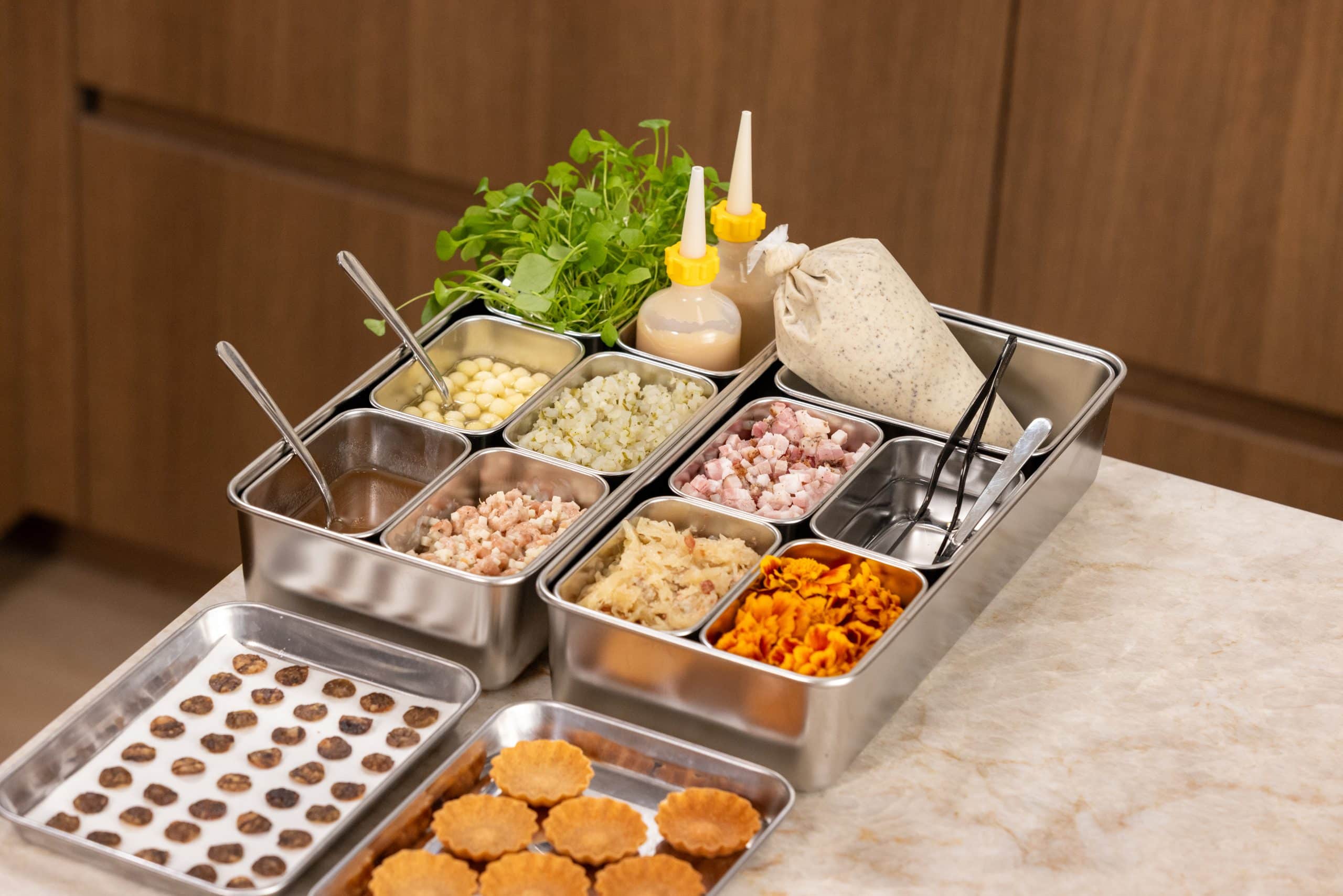
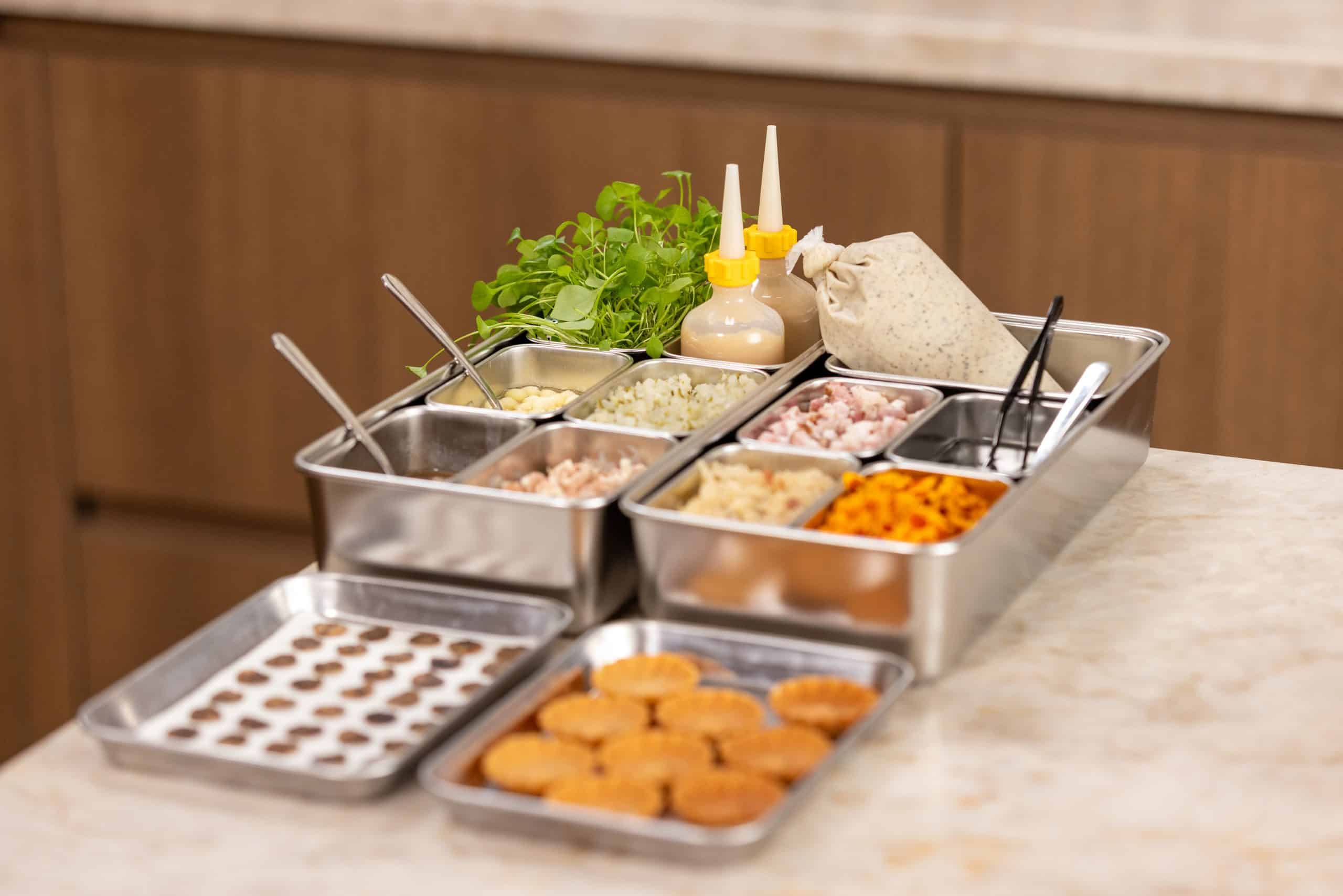
Now that all the prep is done you can set up your station. This is my largest mise en place set up so far! Want to set up your mise en place like me for Christmas? You can find all my prep containers, food trays and piping bottles by clicking on this link. With this you also sponsor my channel and help me develop all my recipes and share them with you guys.
How to finish the amuses
Instructions
The pork belly and sauerkraut amuse
- Fill a tartelette with some reheated sauerkraut and place some pork belly on top. Then pipe a couple dots of the roasted cream gel in between and decorate it with very small winter purslane leaves.
The smoked Jerusalem artichoke amuse
- Pipe a little bit of the apple shallot puree on the bottom of a tartelette and cover it completely with the smoked Jerusalem artichoke salad. Drizzle some more apple shallot puree on top and place some of the marinaded apple balls on there. In total I used 7. Place 7 of the crisps in between and decorate it with small edible flowers. I use marigold flower petals.
The shrimp and truffle amuse
- Fill a tartelette completely with the shrimp salad and cover it with the cheese and truffle cream. Cover the cream with the marinaded buckwheat truffle rounds and it’s ready to be served!
The pairing
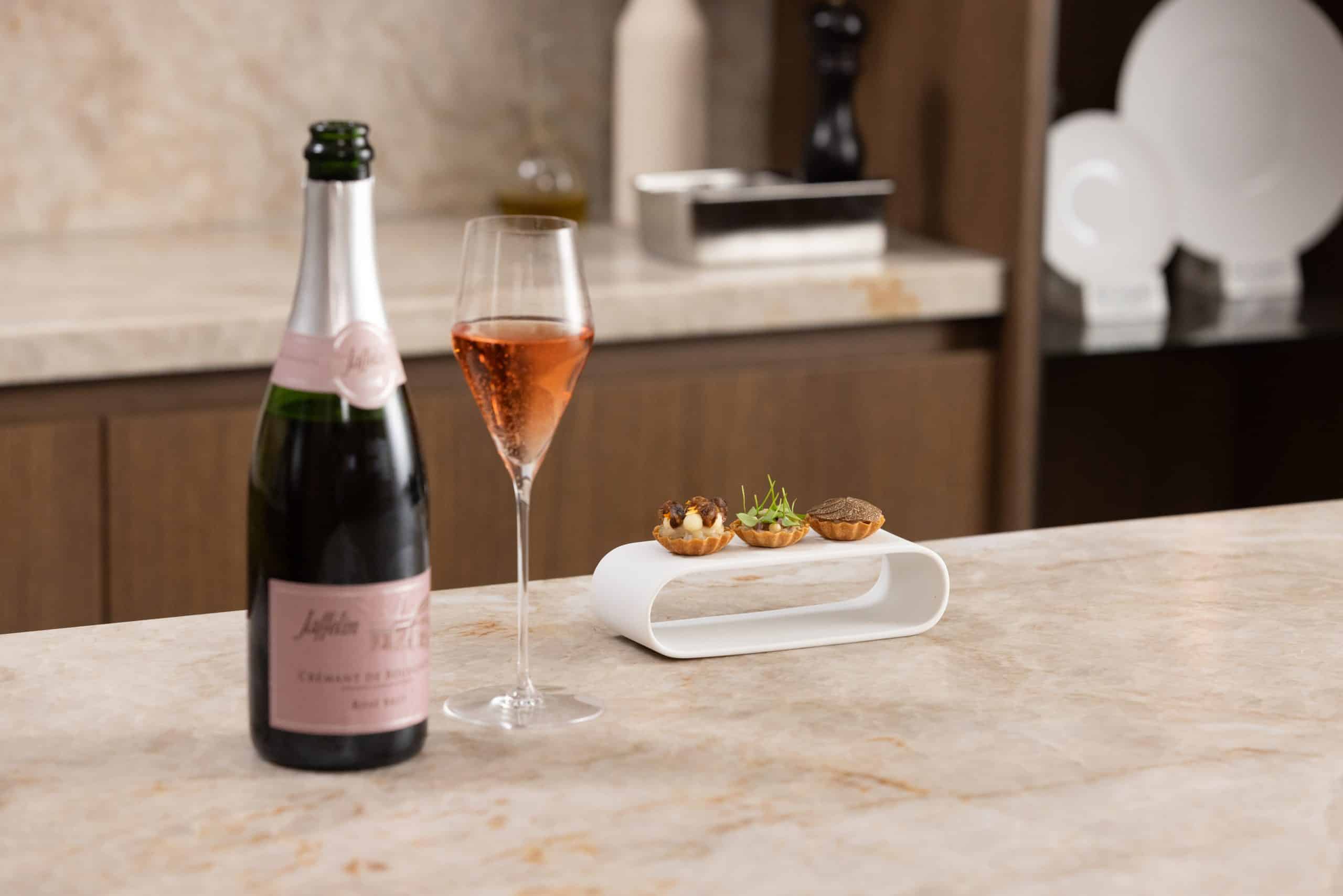
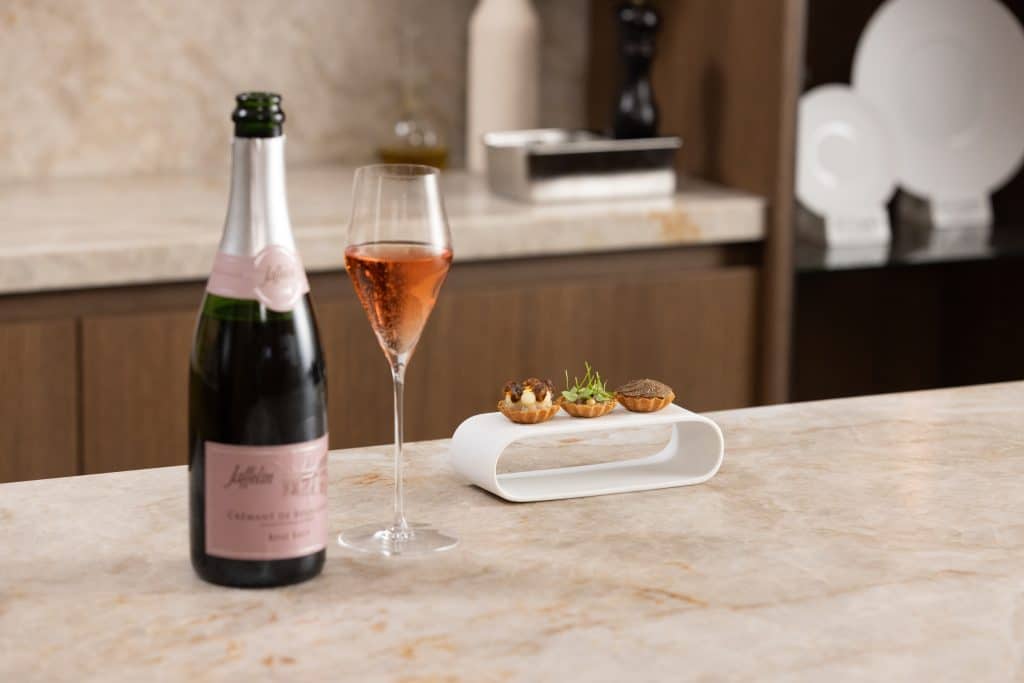
As a paring I choose a lovely Cremant from Burgundy in France. For Christmas all my other pairings are a bit higher in price, so I thought why not start this one with a bubble that’s a bit more reasonable in price (€11).
The wine is made from a delicate blend of three Burgundian grape varieties: Chardonnay, Pinot Noir and Gamay. Produced using the traditional method, just like Champagne, with a minimum of 12 months ageing on the lees. It has delicate aromas of fresh flowers, strawberries and red berries. On the palate, it is fresh and fruity, with fine bubbles and a soft, creamy finish. A lovely aperitif.
Maison Jaffelin is a historic, boutique wine house based in Beaune, in the heart of Burgundy. Its cellars are located beneath the historic Notre-Dame collegiate church, giving the winery a unique connection to the region’s rich wine heritage. Jaffelin focuses on expressing the character of Burgundy through carefully crafted wines, combining traditional winemaking techniques with a modern and elegant style.